
5. Rini Martindill
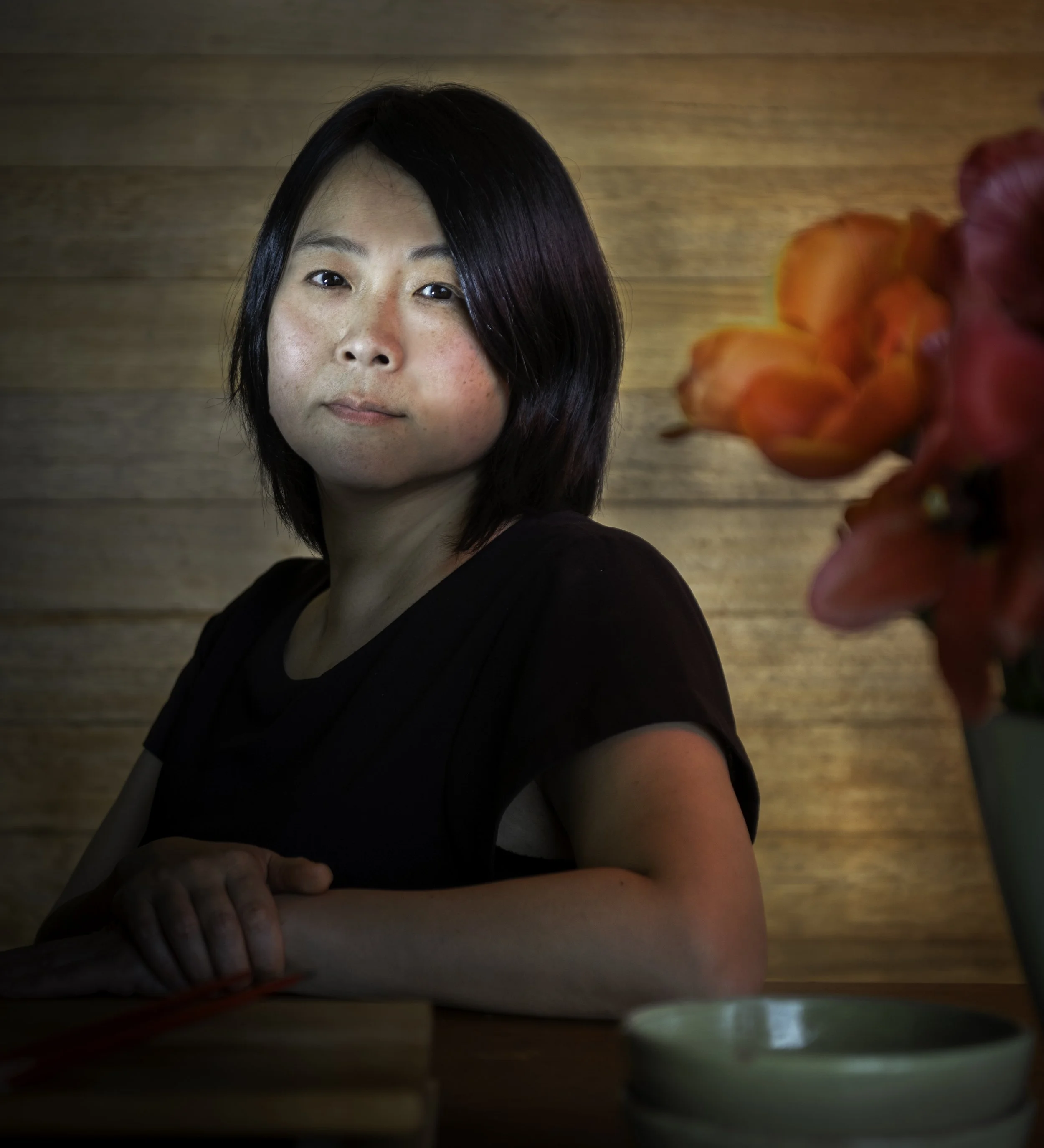
Born in Surabaya, a large Indonesian city in East Java, Rini met her Tasmanian husband Thomas, who was serving in the Australian Navy.
Java is the most heavily-populated island on Earth, with almost 160 million people speaking as 20 different dialects. Rini’s home city has a population of more than 10 million. All this on an island that’s only twice the area of Tasmania!
‘We married twice, in both Indonesia and Australia,’ Rini says. ‘They were very different experiences. At my Indonesian royal wedding I had 24 bridesmaids!’
Rini loves the natural beauty and spaciousness of the Tasmanian landscape.
‘When I first arrived here in in 2009 I wanted to go shopping but I was shocked when Thomas told me the shops in Hobart all closed at 5pm!’Rini laughs.
Rini operates a successful beauty therapy business in Hobart.
‘Most of my clientele are very polite and friendly,’ she says. ‘But on one occasion a customer asked for a therapist who was an Australian, then wanted to speak to the manager.’
The client was surprised when Rini explained that she was the owner and manager.
‘And when she took the time to get to know me, she was fine,’ Rini says.
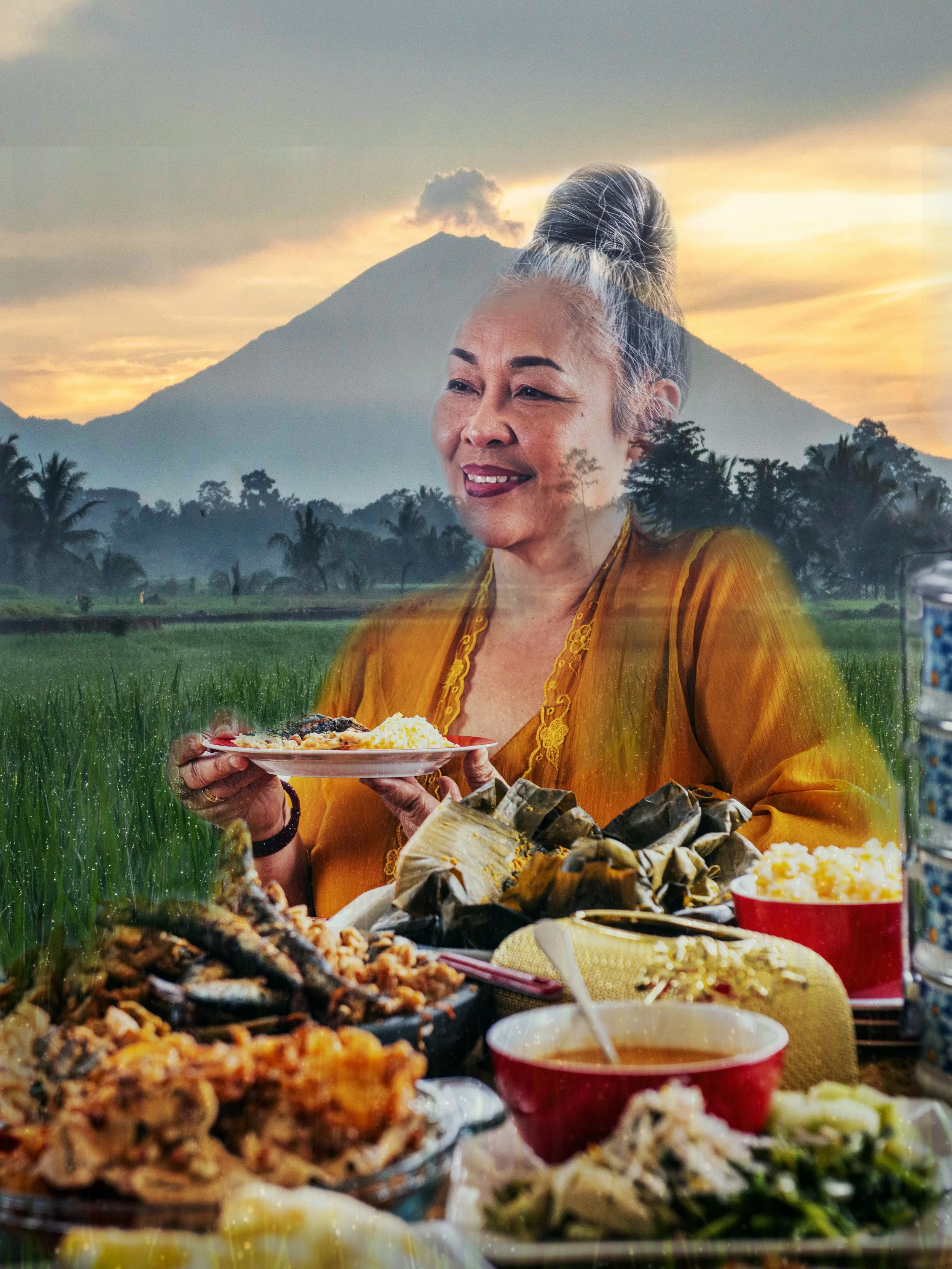
Rini invited me to her house in Blackmans Bay on the day she hosted a lunch for 15 of her Indonesian girlfriends. The dining table was filled with many authentic and delicious Indonesian dishes and most contained chilli. I’ve never experienced such a feast!
One thing that seemed very different from an Australian meal was the absence of alcohol.
‘For us, it’s all about the food,’ Rini says. ‘In Indonesia there’s a very strong sense of community and sharing food is an important way to build relationships.’
Rini explains that the Islamic faith forbids the consumption of alcohol because it is an intoxicant and is seen as harmful to the mind.
The prohibition extends beyond just drinking to include other actions related to alcohol, such as selling, transporting and serving it.
‘When you grow up with certain religious beliefs, it’s difficult to change,’ Rini says.


The Portraits
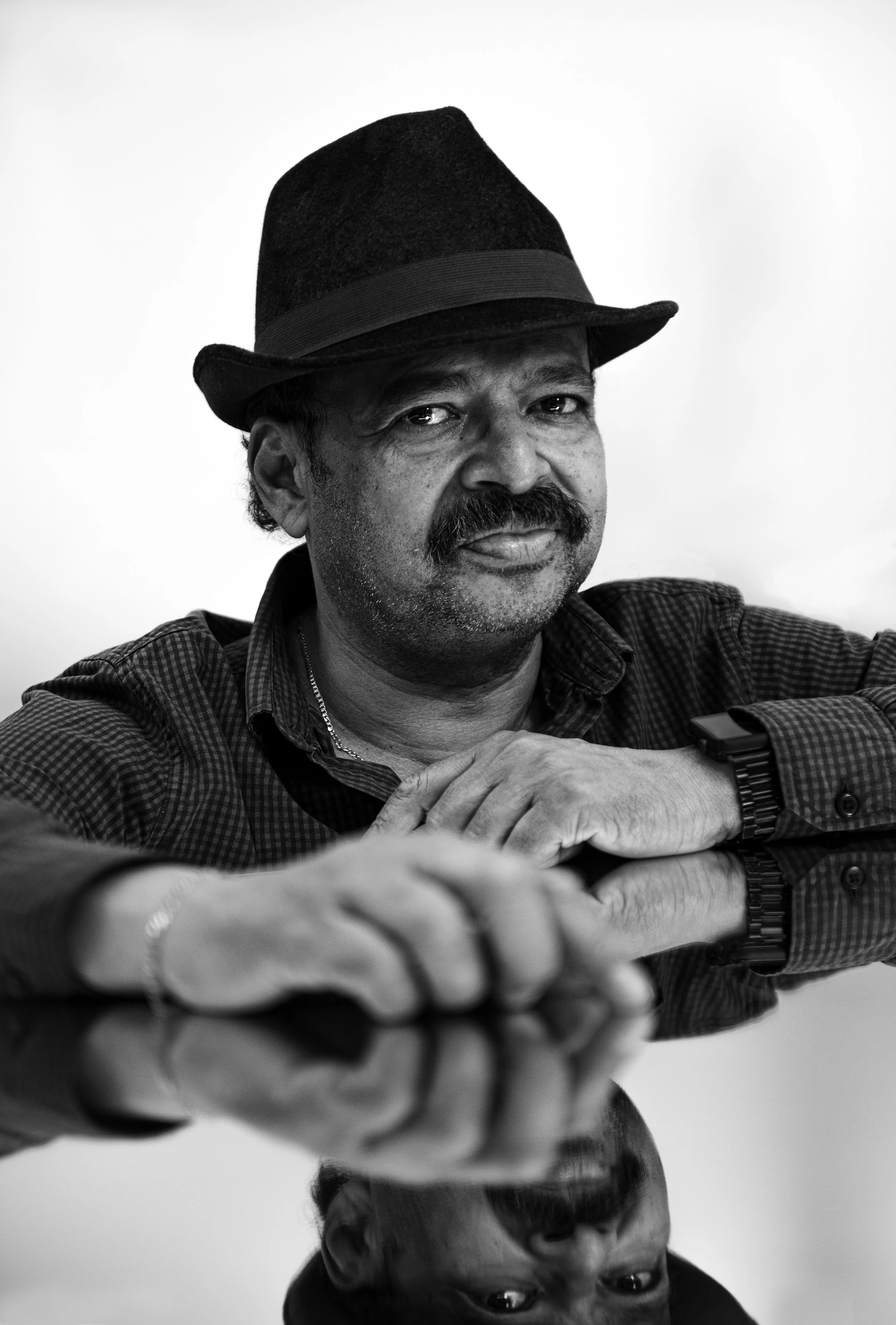
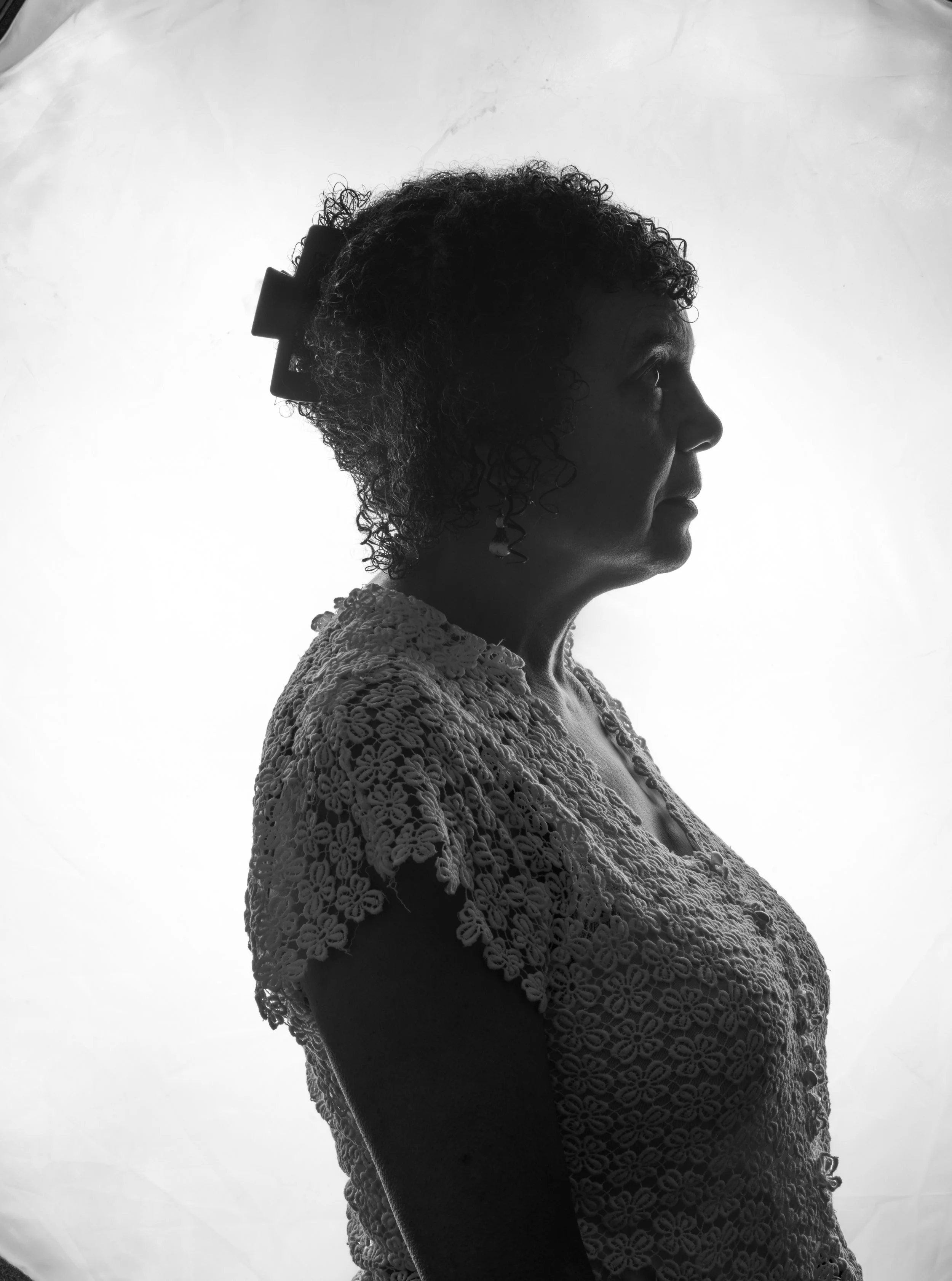
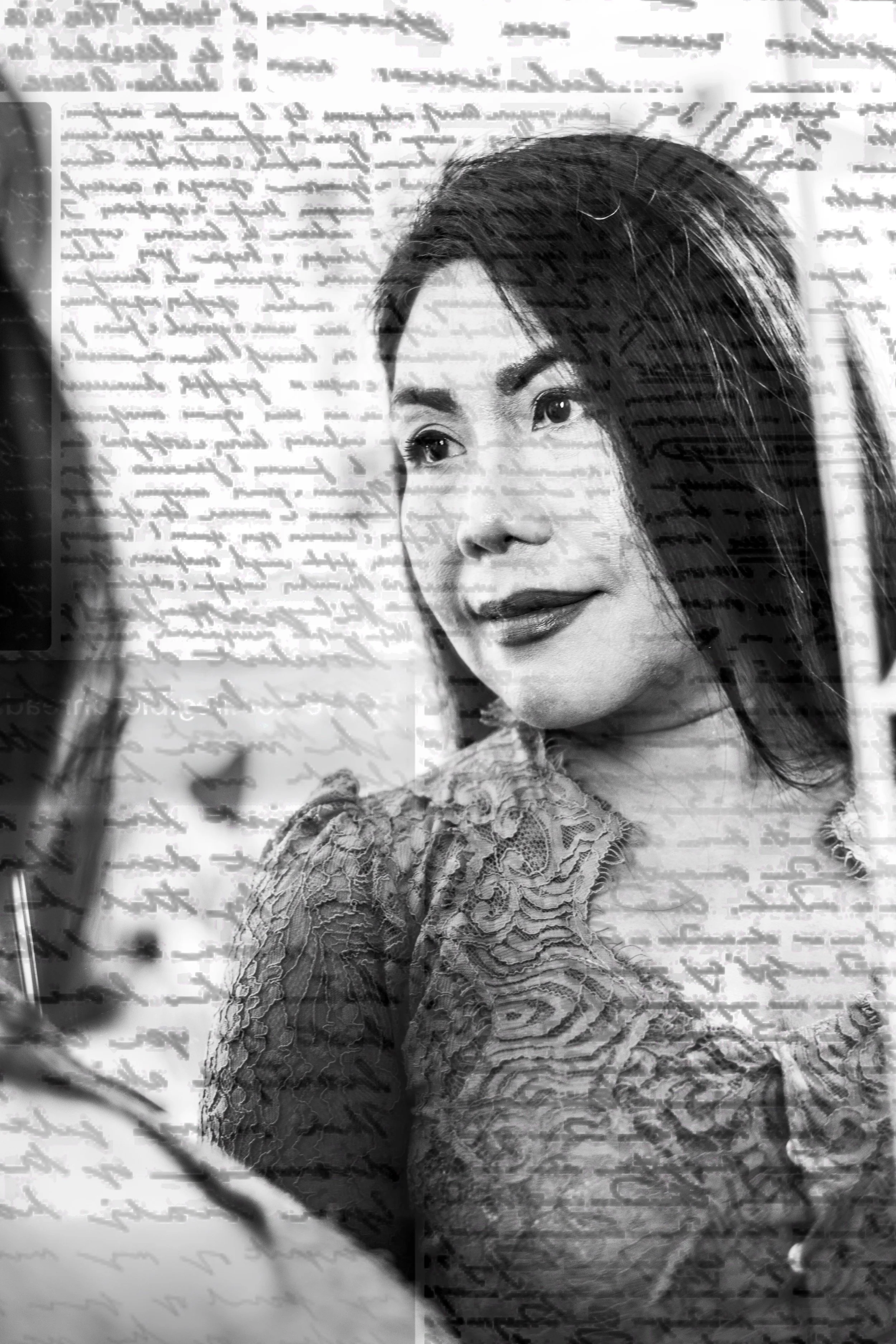
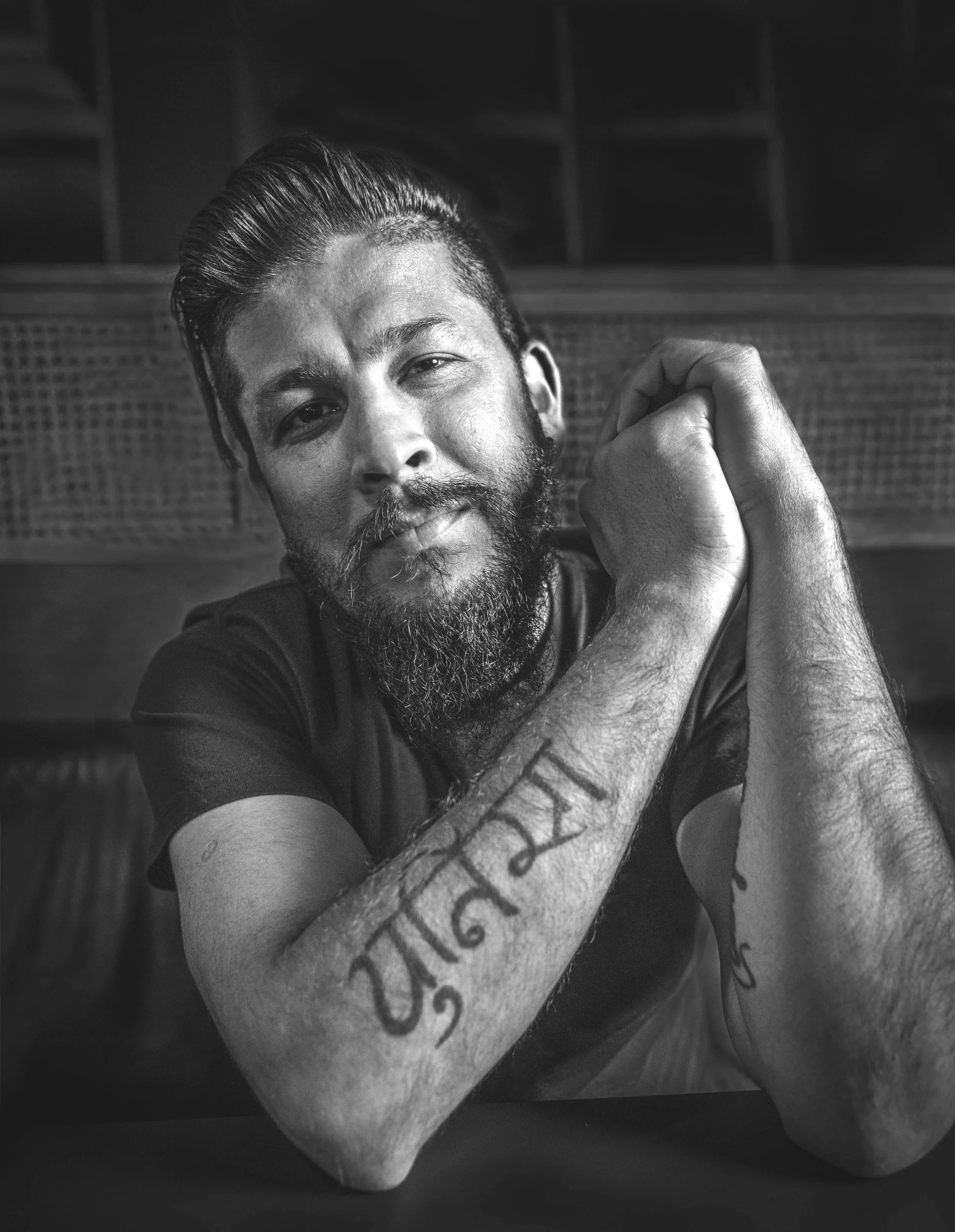
The Faces From Our Town photographic portraits are produced with students in schools and community centres.
The students are shown how to produce powerful portraits using simple lighting and camera techniques, interesting composition and simple props.
Students learn how to plan and develop ideas and think creatively and were given workbooks which guided them through the portraiture workshop.
Individuals chosen for the formal portraits were carefully selected by each school community, a palawa adviser, The Tasmanian Art Teachers Association (TATA), The Multicultural Council of Tasmania, the Department for Education, Students and Young People, the participating schools and local councils.
The portraits and stories profile each individual participant’s journey to Tasmania and how racism and discrimination may affect their lives.
Their stories also hold a mirror up to us, the viewer of the exhibition, and offer profound observations and insights into our lives, our language, spirituality and faith, culture and social history.
The portraits also examine photographic portraiture’s role in defining Tasmania’s social history and identity.
Major themes and goals of the series of portraits and stories include promoting equality, the value of multiculturalism and immigration, combating racism and discrimination, promoting empathy and compassion and adding to community cohesion.
What is a portrait?
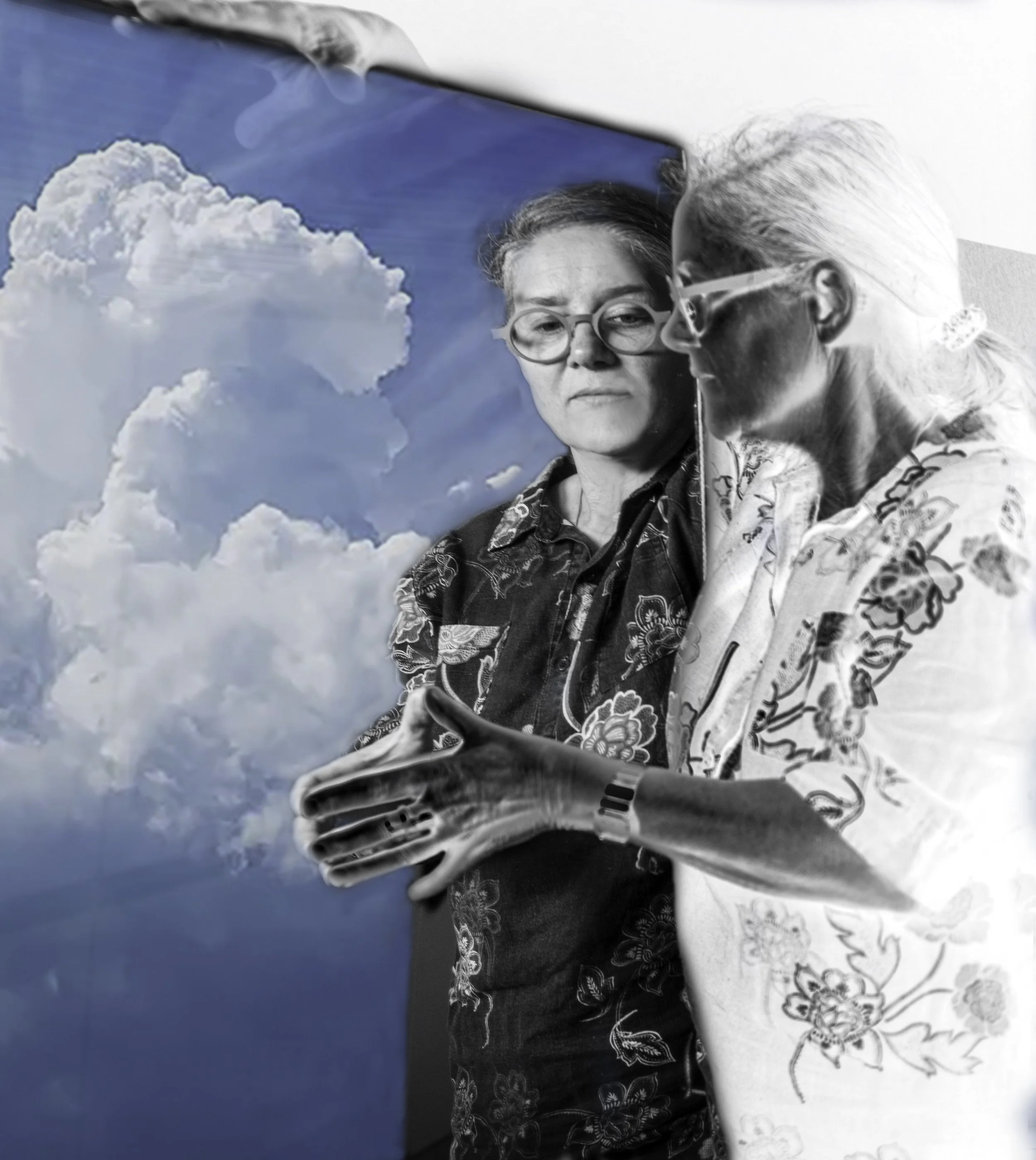
The portraits reflected on the work of photographic artists from the DADA, Surrealist and Pop Art movements. These pioneers such as Man Ray, Erwin Blumenfeld and Bill Brandt changed the way photography was seen as not just as a mirror with a memory - simply a form of documentation, but a creative medium where interpretation and experimentation and creative expression and inventive techniques such as solarisation and wide angle lens distortion and multi-view portraits were used.
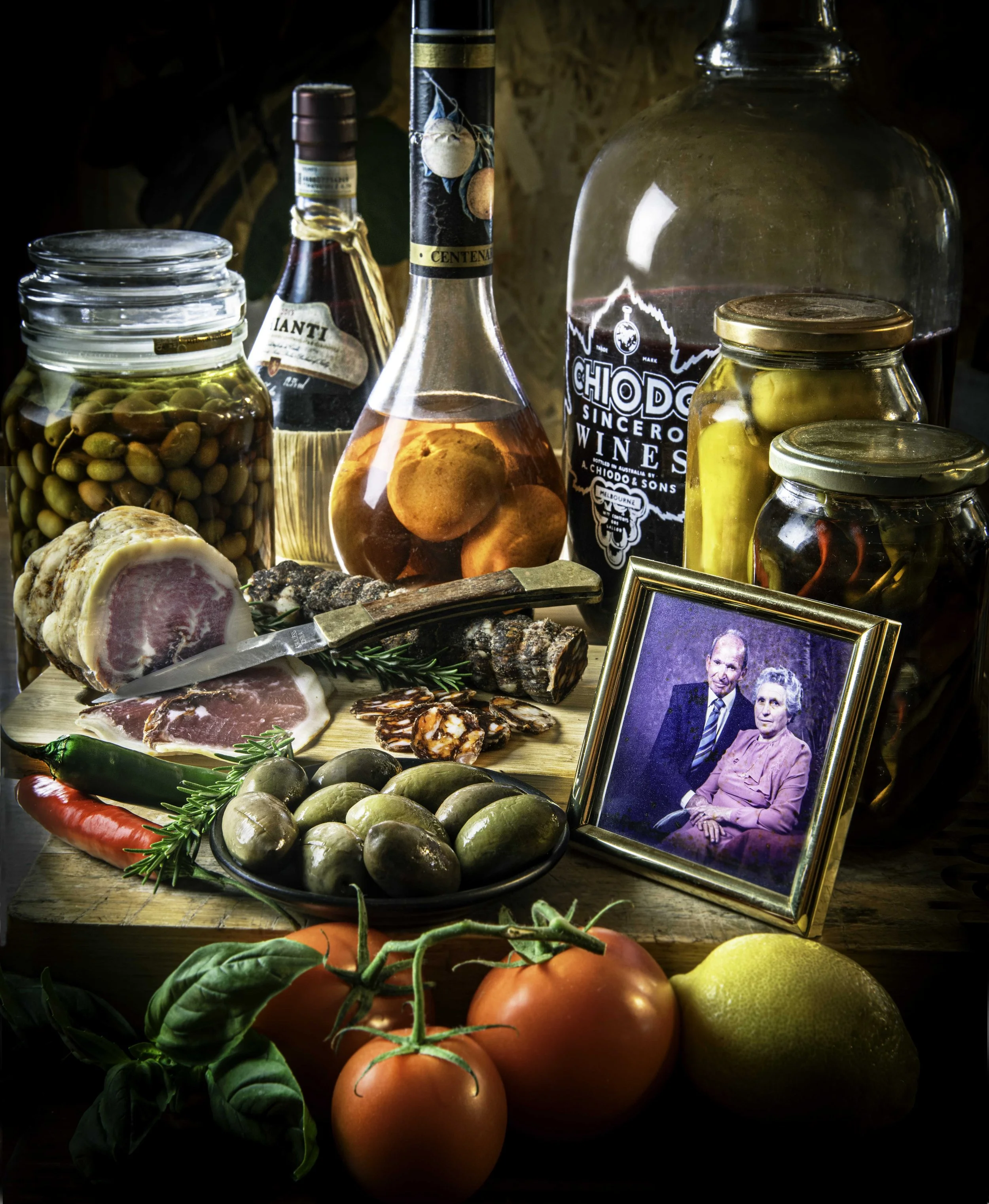
The idea of defining ‘the portrait’ is also investigated through the workshops. I asked the question to students, could an object be used to represent a person?
Arun Pratap
Born in Fiji of Indian descent, Arun and his nine siblings grew up on a sugar cane plantation established by his great grandparents.
The Indian presence in Fiji began in 1879 when the British colonial administration brought 60,000 indentured laborers from India to work on sugar plantations. Workers faced harsh conditions and had limited rights under overseers and estate managers. However many people chose to stay in Fiji after their contracts expired, establishing a distinct Indo-Fijian culture that remains strong today.
‘Our whole family worked long days on our sugar plantation to achieve success,’ Arun says. ‘Australia has social security and this has its benefits, but it can make people lazy and unmotivated if they know there’s always financial assistance to fall back on.’
From childhood, Arun learned to speak Hindi, Fijian and English.
‘Our parents believed in the importance of getting a quality education,’ he explains. ‘I studied hard and received a bachelor degree in physics, medicine and education.’
Arun’s brother was already teaching in Tasmania and suggested that he do the same. Both brothers wanted their children to grow up in Tasmania rather than in the busier cities like Sydney and Melbourne.
Arun was offered a teaching job at St Marys on Tasmania’s East Coast.
‘I arrived on a Saturday and was standing in front of a class on the Monday,’ Arun laughs. ‘All my possessions were still in a shipping container!’
Arun says he felt very welcomed when he arrived in Tasmania.
‘I quite like the cooler climate but I do miss some of my favourite exotic Indian foods and I wish I could swim in the ocean all year-round, like I did in tropical Fiji.’
Arun has been a member of the Riverside Lions Club for the past 15 years and he was recently elected as President.
‘My advice to anyone who has come to Tasmania from overseas is that if you get involved in local life, join in and try to give back to your community, you will be rewarded, respected and accepted.’
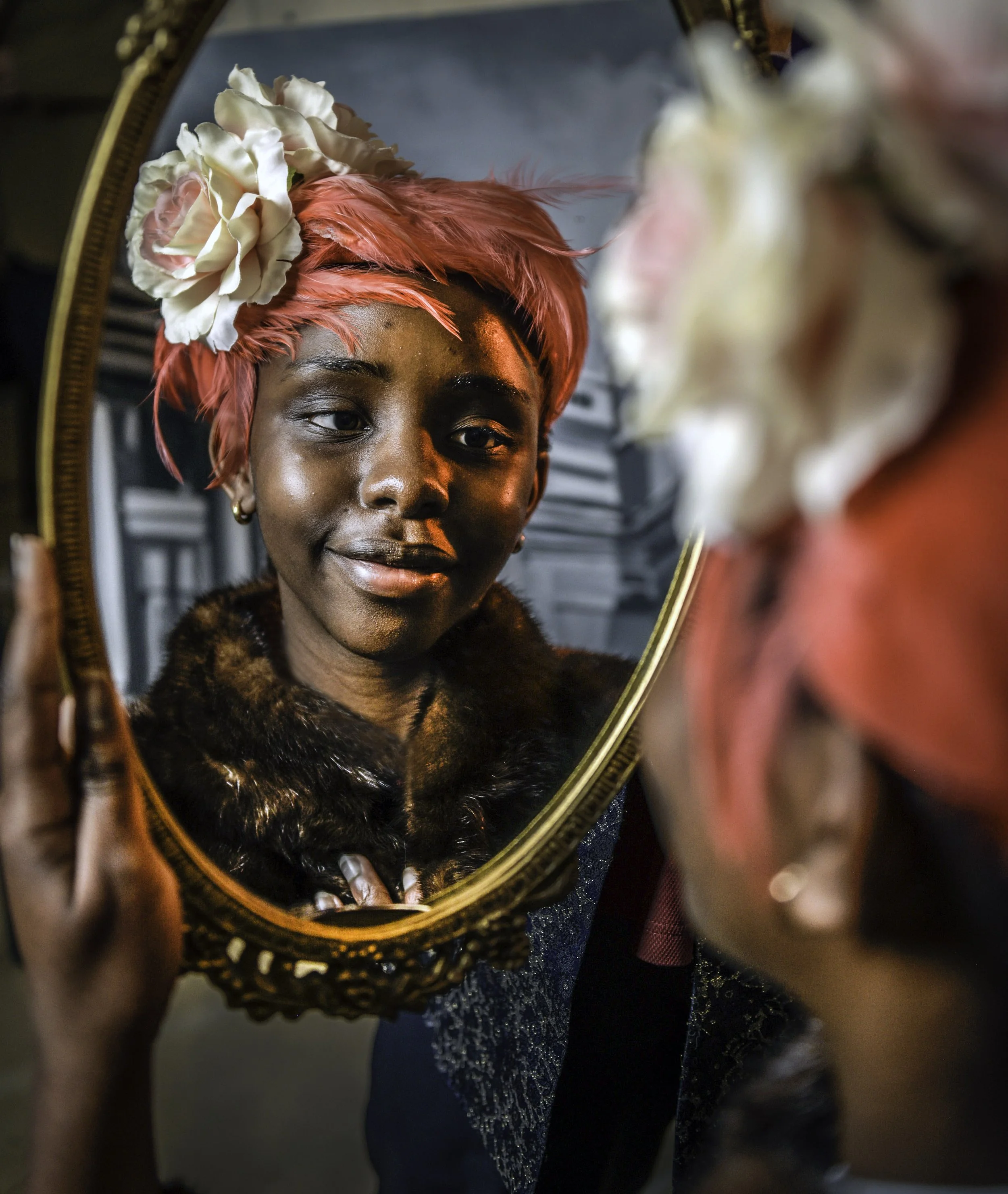
2. Georgina Richmond
Born in the United Kingdom in 1964, Georgina has always been interested in vintage clothing. When she was just 14, she would attend the iconic Kite Market in an old area of Cambridge and she loved to visit jumble sales with friends to pick up amazing collectables.
‘I come from an African and English heritage,’ she says. ‘There was racism in England in those days. I was called horrible names and I felt very different.’
‘I grew up in a very artistic family,’ Georgina says. ‘My granddad was an artist and an engraver. Creativity was always encouraged so I was always drawing and painting.
I went to Cheltenham Art School in Gloucestershire and did a BA in sculpture and painting. I met my partner Michael in 1985 and followed him back to Australia.’
When Georgina came to Tasmania, she says there weren’t many people of colour here.
‘People would tell me I must be Aboriginal,’ she says. ‘I was never asked about my heritage, it was a different kind of racism. I had no friends and I felt very isolated. Thankfully Tassie has got a lot better and is much more multicultural now.’
After coming to Hobart, Michael and Georgina rented in Battery Point. They could see a business opportunity at Salamanca Market so they put a rug on the pavement and sold various books and collectables.
‘We made $100 at the first market and celebrated out with a slap-up dinner.,’ she says. ‘As our sales built up we were offered the chance to join the Kookaburra antiques shop on the corner of Hampden Road. I sold vintage clothes and Michael handled the books. It was a fantastic thriving business. We were at Kookaburra and Salamanca Market for 25 years.
We love living in South Hobart so purchased a house in Wellesley Street and we often walk along the track to the Waterworks Reserve.
I had singing lessons for 10 years with local vocal coach Helen Todd and began performing Celtic songs and learned the harp,’ she says. ‘I was in the EHOS opera and was asked to join a Flamenco group, so had to learn Spanish songs.’
Georgina’s artistic talent saw her enter the John Glover art prize 12 years ago and her work has been accepted twice. She has exhibited at the INCA gallery and now exhibits at Wild Island Gallery in Salamanca Place. She recently complete a series on SoHo and kunanyi and wants to have an exhibition every year.
3. Yasuko Mizushima
First visiting as a 19 year old traveller from a busy Japanese city, Yasuko fell in love with Tasmania’s natural environment and relaxed pace of life.
Years later as a single mum, she was able to migrate to Australia under a three-year multiple entry visitor visa.
‘This meant my daughter could go to school, but I was not allowed to work for three years,’ she says. ‘It was a struggle and I had to use all my savings.’
Yasuko loves food so she opened a successful Japanese restaurant in the trendy inner-city Hobart suburb of Battery Point. Her customers love her authentic Japanese cuisine and her venue has become a popular spot to enjoy traditional dishes like kushiyaki, sukiyaki, tempura and sashimi.
‘Growing up in Japan, I had very little concept of racism, because migration levels are very low in my home country,’ Yasuko says. ‘So I was surprised that some of my Asian friends have been abused and even had eggs thrown at them in Sandy Bay streets.’
But Yasuko believes she knows one way to respond to the problem.
‘I think that food has the power to unite people across different social classes, cultures and backgrounds,’ she says. ‘Sharing meals and learning about dishes from other countries can provide a common ground for connection and shared experience.’
4. Sasmita
Sasmita came from South Africa, where historically racism has been a dominant force in the South African culture. Thirty years since the end of Apartheid, South Africa still grapples with its legacy. Unequal access to education, unequal pay, segregated communities and massive economic disparities persists, much of it is reinforced by existing institutions and attitudes. Many question how is it that racism and its accompanying discrimination continues to hold such a sway in this majority black-populated and black-governed nation.
‘I’m of Indian decent and I came to Australia to escape the racism and violence that was a common experience in South Africa,’ Sasmita says. ‘I was simply looking for a fresh start.’
A qualified hairdresser, she started work in a Hobart suburban salon.
‘I really enjoy living in Tasmania, with its open spaces and wonderful environment,’ she says. ‘I love the feeling of unrestricted freedom and safety.’
But sadly, Sasmita has experienced the downside of our society, too.
‘Some customers at the salon – I’m happy to say it was a very small number – didn’t want to let me cut their hair,’ she says. ‘They openly asked for a white person.’
For Sasmita, this attitude was unexpected. She found it shocking and hurtful.
‘I think that in some areas of Tasmania, people are ignorant and fearful of what they don’t understand,’ she says.
6. Pushpa Kunasegaran
Pushpa’s parents originally moved from southern India to Singapore where she was born and grew up, so her journey to Tasmania is a part of her long migration story.
‘We came to Tasmania 20 years ago when there were very few Indian people here,’ Pushpa explains. ‘We really stood out!’
When she moved here, her husband was only permitted to work for 20 hours a week.
‘This wasn’t enough, so he returned to Singapore to work for a while – this ended up being 13 years,’ Pushpa says. ‘That’s what you call a long-term relationship! But we are all together now in Tasmania.’
Pushpa is a teacher at Launceston Church Grammar school.
‘My curious students often ask me about the red dot on my forehead. I tell them that in our culture it means that I’m married.’
When Pushpa’s children were young, they were taught to address all older people as Uncle and Aunty.
‘This became quite humorous when they visited their friends’ houses,’ Pushpa laughs. ‘Their friends would ask why they called their Dad ‘Uncle’ when they weren’t even related!’
Pushpa thinks that many Tasmanians are not aware how expensive it is to study in Tasmania.
‘Our family has spent close to one million dollars on education, money that has gone back into the Tasmanian economy,’ she says.
One of the things Pushpa finds interesting about Tasmanian life is the way families embrace nature by bushwalking, boating, fishing or going to the beach.
‘I’m also amazed by the work ethic and tenacity of Tasmanian women,’ she says. ‘In my culture, new mums would have a nanny for the first three months to help with the new baby. I’m often amazed when women here return to work so soon after childbirth!’
Pushpa says that she finds most people in Tasmania are actually very welcoming and respectful of those who are in the minority.
‘I always tell migrants that you have to assimilate and mix with locals, then you’ll have the best of both cultures,’ she says.
7. Montz Matsumoto
Montz, who was born in a small village in Japan, started to learn bluegrass banjo from the age of 15.
‘When I was young I romanticised about American culture and that’s where my fascination for the banjo came from,’ Montz says.
He explains that the banjo is similar to the shamisen, a Japanese three-stringed plucked instrument. Like the banjo, the shamisen is constructed with a neck and strings stretched across a sound box to amplify the sound.
‘Banjos have a tensioned head made of goat skin or mylar and a resonating back that act together like a speaker,’ he says.
In 1987 Montz joined the legendary Japanese group, The Natasha Seven, whose music blended American folk styles with Japanese melodies.
Montz came to Australia in 2002 and spent many years busking and performing at folk and bluegrass festivals. He first visited Tasmania 12 years ago and quickly fell in love with the climate and topography.
‘Compared to South Australia, which is so dry and hot, in Tassie I saw forests, water and hills, very similar to many landscapes in Japan,’ he says. ‘I also enjoyed the overcast and cloudy days and when I discovered that Cygnet had its own folk festival, I thought this must be a great place!’
Montz lives a modest, self-sustaining life in a forest near Cradoc. His music is a mix of original Japanese songs as well as Celtic and bluegrass styles.
‘I’m always exploring,’ he says. ‘Naturally my own culture comes out organically in my music, married with my experiences of living in the Huon. Reflections of my life journey and thoughts on how people enter and leave my life – they all feed my creativity.’
Montz says he has never really experienced racism here. Maybe it’s because people in his creative community are regularly exposed to people from different cultures and nationalities and they learn that through music, difference can be celebrated
‘But of course there are many cultural differences between Tasmania and Japan,’ Montz says. ‘Our styles of food are very different. When it’s hot in Japan, we eat colder food, including cold noodles. Soon after I came to Tasmania I was invited to Christmas lunch on a very hot day and we were served a huge roast meal with steaming-hot gravy, which was a surprise. In Japan, portions are smaller and there are vegetables at every meal. The idea of eating a meat pie on its own is bizarre to me,’ he laughs.
Montz says that Japanese and Tasmanian people also have different ideas about the weather.
‘In winter, Japanese mountains are blanketed in many metres of deep snow. But here in Tassie, when it recently snowed down to street level, everything stopped – roads were closed and schools were cancelled. But the snow was only two centimetres deep!’
Montz thinks young peoples’ view of the world through the over-exposure to social media is distorted, dividing and damaging and does not promote social cohesion.
‘Maybe through music, some of those disconnections can be brought back together,’ he says. ‘That is what I like to try to do.’
The Cygnet Folk Festival
is one of Australia’s most iconic folk music festivals. It’s very highly regarded by musicians and festival-goers from all over Australia and overseas. The Festival is a showcase of eclectic music genres featuring both local and international talent, dance, poetry, masterclasses, film, kids' entertainment, food, wine, art and local handicrafts all set in the breathtaking scenery of Tasmania's Huon Valley.
8. Titin Ratna Wahyuni
Before moving to Tasmania, Titin was a teacher in Malang, a city in East Java, Indonesia. Prized by the Dutch for its mild highland climate, Malang is rated as Indonesia’s most charming and relaxing city.
‘The city retains much of its colonial architecture, often blending Indonesian and Dutch styles, with grand mansions lining the main boulevard,’ Titin says. ‘It’s known as the jewel of the eastern highlands.’
After migrating to Australia, she had to learn new customs and adapt to a different culture.
‘When I first arrived I couldn’t understand Australian slang,’ she laughs. ‘I would ask them to slow down and speak English please! People would often say ‘no problem’ – and I didn’t understand what they meant because all I heard was ‘problem’. I used to think … what problem?’
Titin wanted to open a shop in the front of her Tasmanian house, as many Indonesians do, but she wasn’t used to all the permits and red tape. Another fascinating and funny discovery was the Australian attitude to suntanning.
‘I saw a sign on a tanning clinic in Sandy Bay which said ‘come in white and we’ll turn you black!’ It’s the opposite in Indonesia – we hide from the sun and want to keep a pale complexion,’ she explains.
Titin worked for many years in a popular Sandy Bay restaurant, where unfortunately she occasionally experienced racist behaviour.
‘One day two older women came in but left quickly, because they didn’t want me to serve them,’ she remembers. ‘I felt quite confused and hurt.’
Titin enjoys Australia’s easy-going society.
‘In Indonesia, women must wear a hijab to cover their hair and people pray five times a day,’ she says. ‘I am Muslim but if my Aussie husband John said he was an atheist, he could be imprisoned! I like it that in Australia things are very open and free and women can wear what they want and you can have a say about whatever you like.’
Titin operates a very successful Indonesian street food stall at the Hobart Sunday Market. The market sells fresh produce and artisan food and is acclaimed as one of Australia’s best farmers’ markets. She uses all the culinary skills she learned in Indonesia and market-goers love her delicious martabak,fried crepes with a sweet or savoury filling.
Titin explains that the style of cooking and eating is quite different here.
‘Indonesian women normally cook a range of various different dishes and leave them out all day for people to graze on,’ she says. ‘The house is always open and no one goes hungry. I thought it was strange that when I went to a restaurant in Tasmania I had to order just one main course!’
9. Renata Pasieczny
Renata’s father Henry migrated from Poland in the 1950s to work on the Hydro Electric Scheme at Tarraleah in central Tasmania. The working conditions for the so-called ‘Hydro Poles’ were harsh and isolated.
Henry’s father suggested he contact a girl in Poland with a view to marriage. After many letters, Anna arrived in Tasmania twelve months later and within six weeks they were married. Five years later they had a son and three daughters, including Renia.
‘We spoke Polish at home and from the age of five I was teaching my parents English bit by bit, as I was learning it at school,’ she says. ‘My mum went to work at the Carlyle Hotel, with hardly any English!’
Renia changed her name to Renata so people could more easily pronounce it.
‘This didn’t actually help that much, because other kids still teased me about my surname,’ she says. ‘My life at school was very difficult and I didn’t enjoy it.’
Renata also attended Polish school to keep up her Polish and she participated in Polish dancing and cultural events as well as Polish Girl Guides and Brownies.
‘At home there was a strong emphasis on studying and learning to benefit from education, so my parents invested in two sets of encyclopedias,’ Renata says.
Her family house in Glenorchy was small so all three sisters shared one small room.
‘We grew up in a Catholic family and attended the Polish church,’ she says. ‘I have a treasured photo of me being confirmed by the Polish-born Pope John Paul II when he visited Tasmania.’
Renata’s school lunchbox was filled with Polish delicacies including Ukrainian sausage and dark brown pumpernickel bread.
‘It smelled weird compared to my Aussie schoolmates,’ she says. ‘I just wanted to fit it and be like my friends, so I dreamed of having white bread sandwiches with Belgium sausage and lashings of tomato sauce!’
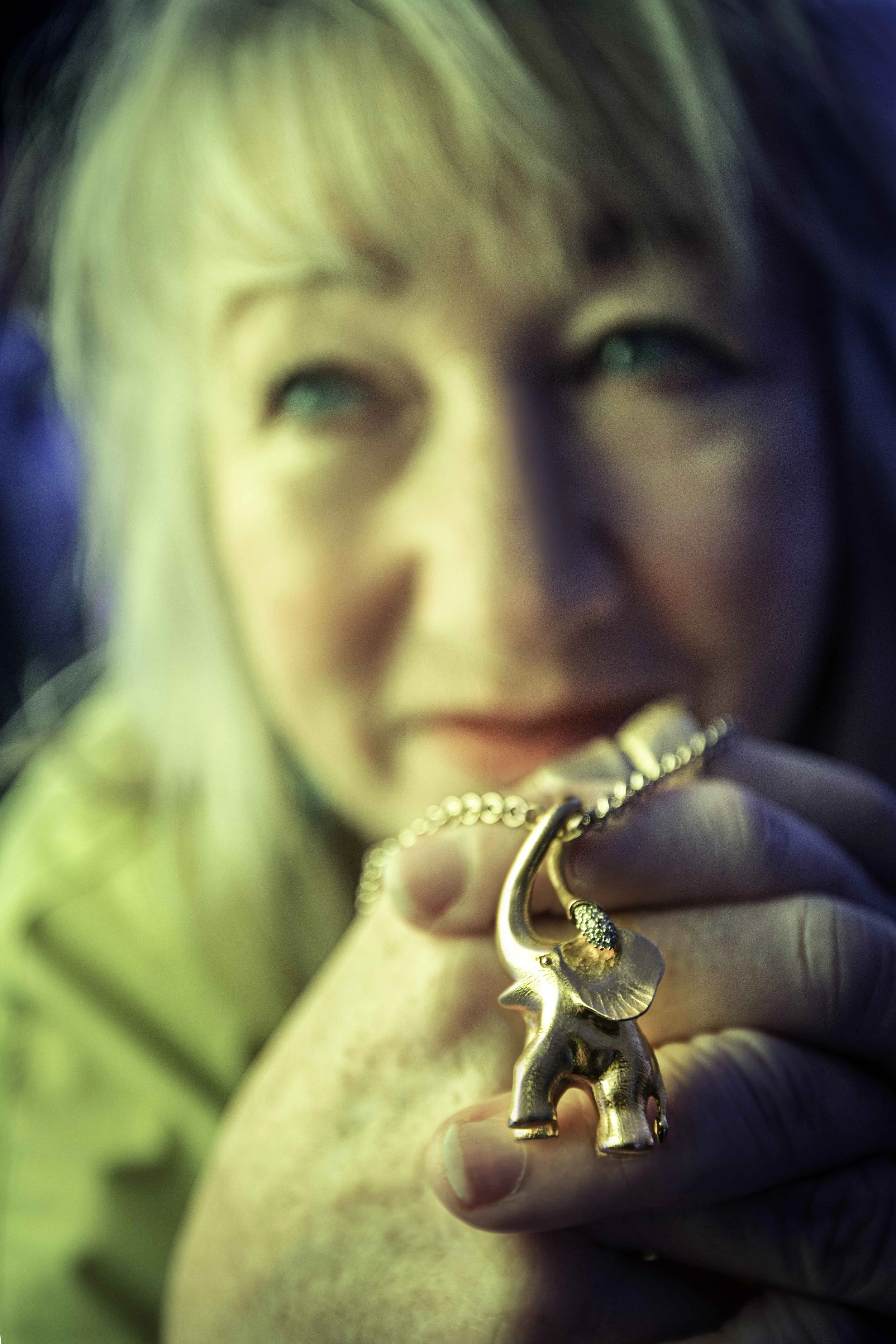
Renata’s favourite piece of jewellery is a gold elephant.
Elephants are spiritually revered for wisdom, immense strength, prosperity, and longevity, often acting as a bridge between the earthly and divine. Their presence signifies prosperity, good luck, and ancestral wisdom.
As one of the largest land animals, they embody immense physical and emotional strength, stability, and patience. In Hinduism, the deity Ganesha (with an elephant head) is worshipped as the remover of obstacles and patron of intellect. In Feng Shui, elephants symbolize good luck, prosperity, and stability. In African traditions, they are believed to be reincarnated chiefs or guardians of ancestral, spiritual knowledge.
Renata is now a very successful hypnotherapist, psychotherapist and counsellor, using her own lived experiences to inform her work with her clients, including migrants to Australia.
10. Robbie Gilligan
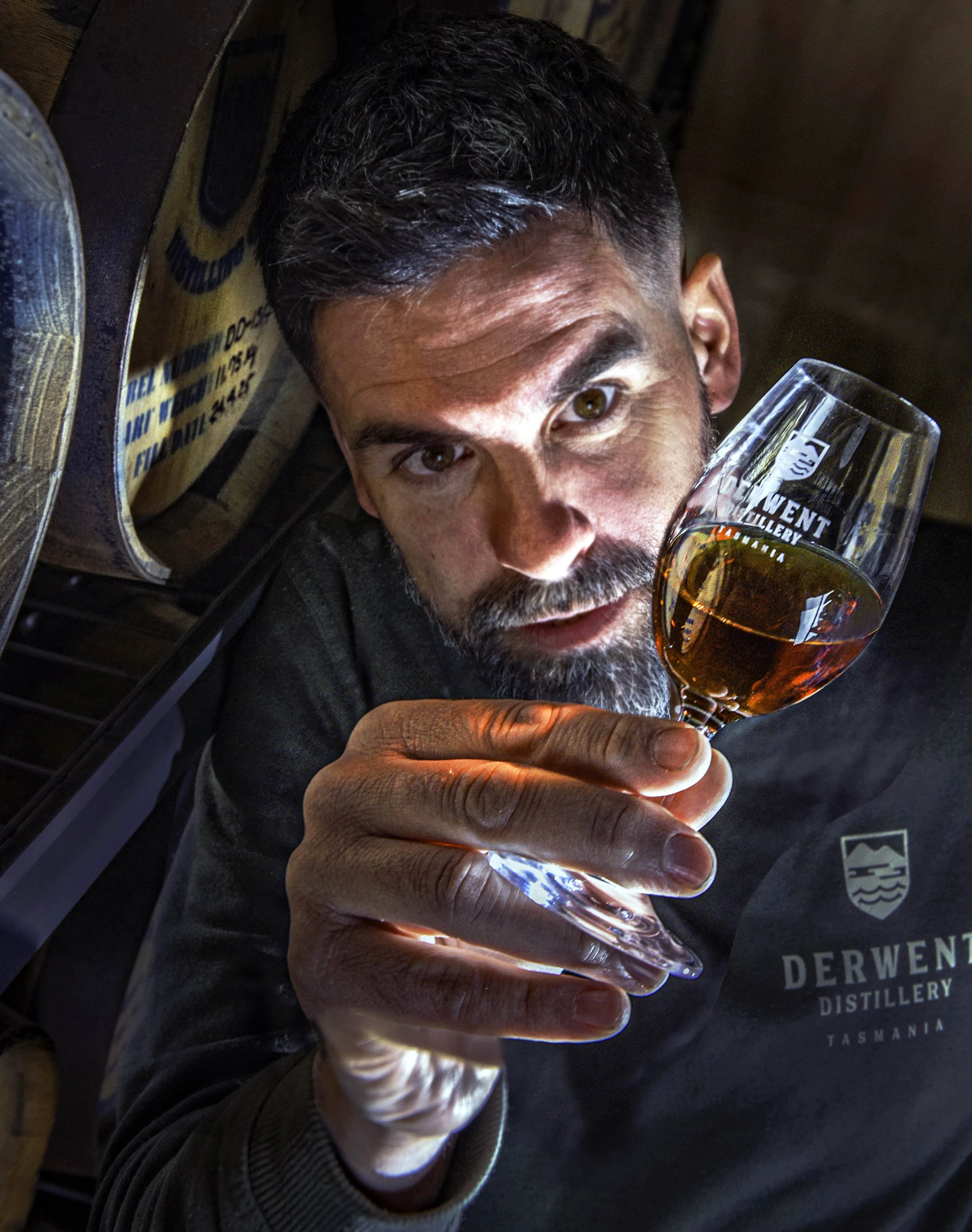
Robbie Gilligan grew up in Glasgow and although Scotland is the ancestral home of whisky, he didn’t even think about making a career in distilling until he came to Tasmania and established the Derwent Distillery with his partner Emma.
As well as whisky, Robbie and Emma also make liqueurs from Tasmanian produce. Their hazelnut liqueur is made from Tasmanian Hazelbrae hazelnuts and is delicious!
The distillery’s location is at Dromedary on the Derwent River.
‘The extra humidity caused by the unique riverside weather conditions and Tasmania's pristine air create the perfect location for single malt whisky maturation,’ Robbie says. ‘The distillery’s name also honours a previous Derwent Distillery, one of the first legalised distilleries in Tasmania, originally set up on the banks of the Hobart Rivulet in Gore Street, South Hobart in the early 1820s.’
A change in colonial government policy saw Lieutenant Governor Franklin introduce legislation to abolish the local distilling industry in 1838. If not for this action, the Tasmanian spirit industry would have rivalled Scotland, which only had its first legal distillery in 1824. But our local distillers are now making waves internationally, with Tasmanian whiskies regularly winning ‘best in the world’ awards.
Robbie has spent time camping, trout fishing and tasting a wee dram with whisky icon Bill Lark in the lake country of the Central Highlands.
‘It’s beautiful like Scotland’s highlands, but a wee bit more rocky,’ Robbie says.
The Scottish Gaelic word for whisky is uisge-beatha, ‘water of life’. In 16th-century Scotland, apothecaries sold whiskey as a tonic to slow aging, cure congestion, and relieve joint pain. During American prohibition, doctors prescribed it to treat pneumonia, high blood pressure, and tuberculosis.
Robbie has empathy for people who come to Tasmania from another country and have to learn a new language.
‘I know how they feel,’ he says.
Robbie has a very strong Glaswegian accent and he says people ask him daily to repeat what he has just said.
‘It happens all the time,’ he explains with a grin. ‘But I guess it’s good marketing for a Scotsman to own a whisky distillery. People love my kilt – whenever there’s a Tourism Tasmania event they always ask me to wear it.’
And yes, there is a Tasmanian state tartan, and you can find it in various products like kilts, ties and other accessories. The tartan was designed in 1988 and is inspired by the Tasmanian landscape, featuring colours like black, grey, green, red, and yellow.
11. Nichole Woodiwiss
When she was just four years old, Nichole moved from the Philippines to Australia.
‘My mum married an Australian man,’ Nichole says. ‘She came from a poor family so she was happy that I’d have a good education and more opportunities in Tasmania.’
When she arrived she spoke Tagalog, which is one of the Philippines’ two official languages, alongside English. The name comes from taga-ilog, meaning ‘river dweller’.
Nichole explains that she quickly forgot the Tagalog language, but found it easy to learn English because she was so young.
‘We go back to the Philippines every year to my mum’s small village in the mountains,’ she says. ‘I enjoy seeing my cousins and eating more home-cooked food. It’s very family orientated. I’m actually a bit annoyed that I lost my knowledge of the local language, because it would make it a lot easier when I go back!’
Nichole lives in a small Tasmanian country town and says she felt accepted at her first primary school.
‘But that changed at high school,’ she says. ‘Some of the students were cruel and judgemental. It took them a year to get used to me but now I have many good friends and I’ve blocked out any negativity.’
Nichole says that in the Philippines, some people discriminated against her Australian father.
‘So I guess there is racism everywhere,’ she says. ‘I’m completing year 10 and my goal is to study to be a nurse. I am excited about my future here in Tasmania.’
12. Fontane Chung and Family
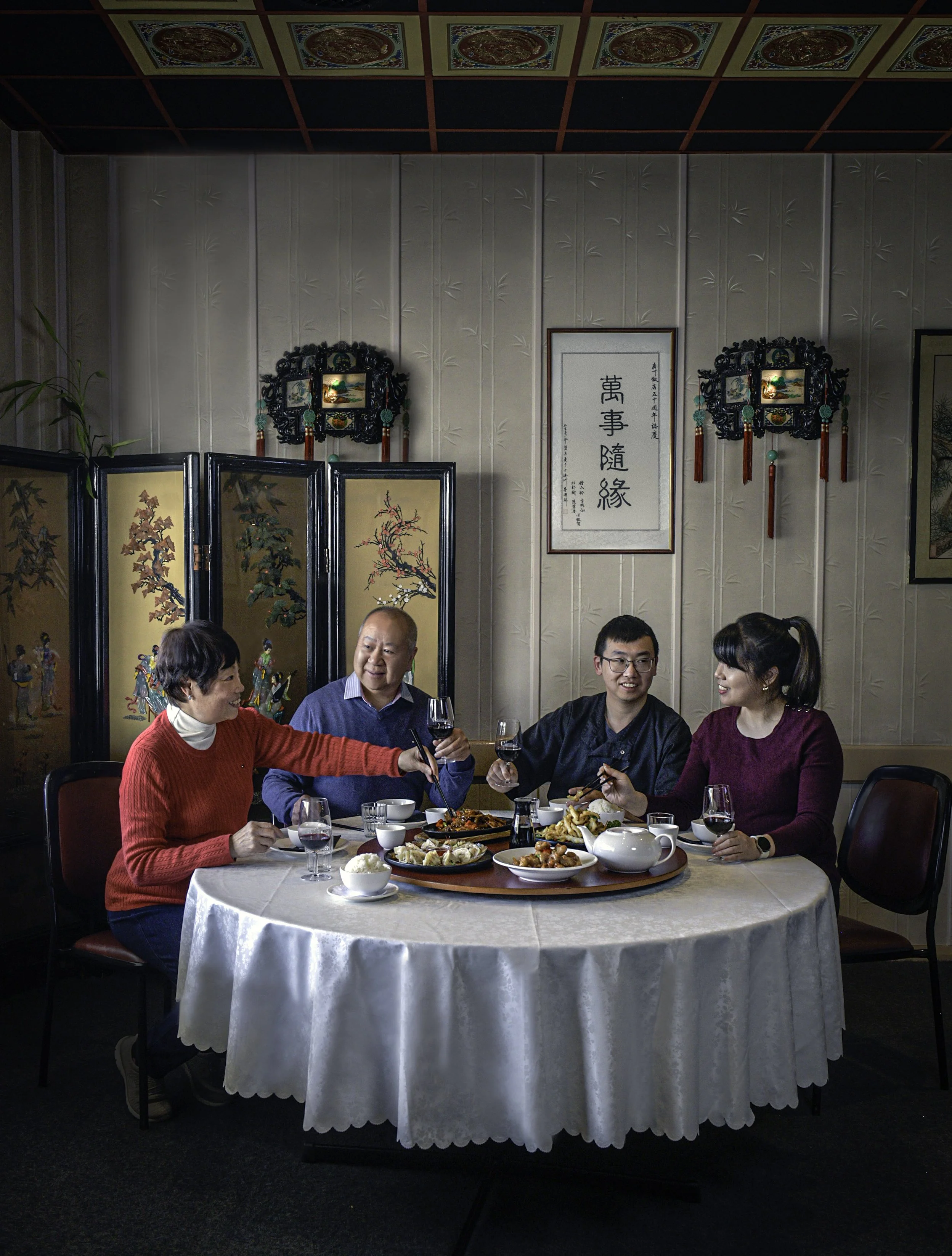
Where would you find Australia’s oldest continuously-operating Chinese restaurant? It’s at 203 Charles Street in Launceston and it has been run by three generations of the Chung family since 1961, when market gardener Scott Chung took over Lew’s Café from three brothers and renamed it the Canton.
Scott’s son in law Noel and his wife Dianna took over the business in 1986, then sold it in 2019 to the third generation, their daughter Fontane Chung and her chef husband Sonny Yang.
Australian immigration made Scott Chung wait 15 years before he could bring out his family, so Fontane Chung’s mother Dianna didn’t see her father till 1970 when she was 15. ‘It’s the sacrifice he had to make if he wanted a better life in Australia’, Dianna says.
Fontane’s father Noel Chung is a first-generation Tasmanian who was born in Hobart. He went to school in Hobart and learnt Cantonese at home. The family had a market garden in Glenorchy and his brothers and relatives had restaurants in Sandy Bay, Hobart, Kingston and North Hobart.
‘The strength of the family unit has kept us going,’ Noel says. ‘It’s much the same for Greek and Italian shops and restaurants.’
Noel encountered some racism at his elite Hobart school.
‘There was a bit of snobbery from the students who were driven to school in Mercedes and BMWs and I arrived in a ute full of veggies,’ Noel laughs. ‘You simply had to learn resilience and tolerance.’
His daughter Fontane went to school in Launceston and says there were a couple of racist students at school.
‘But I just made a point of making friends with them,’ she says.
Her dad Noel explains that the family restaurant has adapted to society’s changing needs.
‘In the 1960s the Canton was open until 3am so patrons could eat after the pubs closed at 11pm,’ he says. ‘When we took over in the 1970s we diversified the menu, adding Australian-style foods to cater for customers’ tastes. Then there was the 1980s recession, the pilots’ strike in the 1990s and more recently, Covid. Keeping a business going over many decades has had its challenges,’ Noel says.
Sonny and Fontane met at the restaurant, where they both worked as kitchen hands.
‘After 65 years, the Canton has many wonderful and loyal patrons,’ Fontane says. ‘Most of our guests are regulars so they usually don’t need a menu because they come for the same dishes. Sometimes guests ask for my grandfather’s favourites, even if they’re not on the current menu, so the chef has to be prepared for unusual requests.’
Fontane says they’ve even have had customers come from Flinders Island to take their evening meal home!
Chinese Tasmania
Chinese settlement in Tasmania began in the 1830s with the arrival of nine Chinese carpenters. During the tin-mining boom of the 1870s and 1880s there were 40 Chinese-owned tin-mining leases operating. Tasmania’s Chinese population of 1500 people mostly lived in the rural north-east. Almost all came from China’s Guangdong Province.
In the 2021 census, 12,300 people in Tasmania – about 2 per cent of the state’s population – reported having Chinese ancestry.
In 1901 the Immigration Restriction Act, also referred to as the White Australia Policy, was enacted shortly after Australia's Federation. It included a dictation test that required applicants to write a 50-word passage in a European language and was designed to restrict the number of Asian immigrants. The policy lasted until the 1950s.
* Image: L-R Dianna and Noel Chung, Sonny Yang and Fontane Chung.
13. Neriiya Kadisha
Neriiya was born in the Democratic Republic of Congo. Her parents came to Australia seeking a better life for her and her two sisters.
Located on the Equator in central Africa, the DRC was colony of France until gaining independence in 1960. French is the official language of administration and business, although there are four other national languages and more than 200 other dialects spoken in the country.
Neriiya was just three years old when the family arrived in Tasmania and she spoke mostly French, learning English at school.
‘I know that I look different but I’m fine with that. I grew up with most of my classmates from my first day at school so I’ve never really experienced racism or had any bad experiences,’ Neriiya explains. ‘Perhaps going to a Catholic school where compassion and acceptance are an important part of the school ethos has helped.’
Neriiya enjoys studying media arts and exploring her creative side. She hopes to become a dermatologist or midwife when she completes her studies.
14. Rabin Sapkot
Rabin was born in the small village of Padampur in Nepal. The village and its residents were moved in 1973 to allow for the establishment of Chitwan National Park, Nepal's first national park and a prime ecotourism destination today, with abundant wildlife and a variety of landscapes.
The country’s official language is Nepali but English is a mandatory subject for all students from primary level.
After leaving school it was Rabin’s dream to widen his horizons in life, so he studied tourism and travel and worked in hospitality and marketing in the UK for five years.
‘When I returned to Nepal I was 24 and restless, so I thought about moving again,’ he says.
He and his wife Unissa had friends in Australia who suggested they come here.
‘We’d had enough of big city life in London so we decided to move to Tasmania,’ Rabin says. ‘I enrolled at UTAS to complete a Master’s degree in International Business and Public Accounting. I was allowed to work 20 hours a week and I had various jobs in the hospitality industry in Hobart.’
Rabin says Tasmanians are fortunate to be able to defer payment of their university HECS debt.
‘My degree cost $60,000, which is about four times more than Tasmanians would pay. My wife and I worked fulltime for five years to pay the money back,’ he says. ‘We also feel it’s our responsibility to help our parents as their pension in Nepal is not enough to survive on, so they rely on our assistance.’
Rabin’s wife and their two boys, now aged six and four, all have Australian residency.
‘Tasmania is now home,’ he says. ‘I feel a strong sense of community here, like my small village in Nepal.’
Rabin says he hasn’t had any significant experience of racism but he knows of incidents in some suburbs where Nepalese and Indian shop owners have been verbally abused and even physically attacked.
‘I think racism exists because many people haven’t travelled or been exposed to people from different cultures,’ he says. ‘But I’ve noticed a positive change in the last ten years, with people being more friendly and tolerant.’
Rabin goes back to Nepal every couple of years and his parents come to Tasmania every other year.
‘I think it’s important for my two boys to know their culture,’ he says. ‘I feel proud when the boys go back to Nepal and they naturally pick up Nepali again.’
Rabin is a well-known and much-loved face in the Hobart hospitality industry and has worked for a restaurant group for ten years. He also has his own catering business at local festivals. His stall, Ekka Hobart, showcases untapped flavours from Nepal and India, from the foothills of the majestic Himalayas of northern Nepal to the tropical Indian region of the south.
Ekka Hobart is the brain child of Rabin and his brother Nabin. It first opened at Tasmania’s Taste of Summer in 2024/25 and the brothers returned the following year to delight festival goers with their delicious and diverse menu.
‘Food is a fantastic way to share culture,’ Rabin and Nabin say.
15. Carleeta Thomas
Carleeta Thomas is a palawa/Tasmanian Aboriginal woman who was born on truwanna/Cape Barren Island in the eastern Bass Strait. Today’s residents of truwanna are descendants of the European sealers and the Tasmanian Aboriginal women who were seized from their tribes by the sealers and taken to islands in the Furneaux Group.
Carleeta is connected through her mother’s family to Mannalargenna, a chief of the Trawlwoolway clan in the north east of lutruwita/Tasmania.
Mannalargenna was a clan leader who led a series of attacks settlers during the period known as the Black War in the late 1820s. He eventually assisted George Augustus Robinson in his ‘Friendly Mission’ to capture the remaining Aboriginal people, with the promise that he and his people would not be sent into exile. This promise was broken and they were sent to the internment camp at Wybalenna on Flinders Island, where Mannalargenna died in 1835.
On her father’s side, Carleeta is descended from Fanny Cochrane Smith, whose father Nicremeric, a palawa man from Robbins Island, was also sent to Wybalenna. Fanny Cochrane Smith’s wax cylinder recordings of songs are the only audio recordings of any of Tasmania's indigenous languages.
Carleeta says her childhood on truwanna was idyllic.
‘With such a small population, everyone knew everyone else,’ she says. I went to the local school with all my relatives and some days at lunchtime, if it was warm, we’d head off to the beach. The whole island was our playground.’
With her elders, Carleeta went on mutton bird hunting expeditions to Big Dog Island, a cultural ritual practised by Aboriginal people for thousands of years. I suggest to Carleeta that mutton birds are an acquired taste, with a fishy, gamey flavour.
‘I really love them when the skin is fried and crispy,’ Carleeta laughs. ‘Mutton bird is like our chocolate or ice cream!’
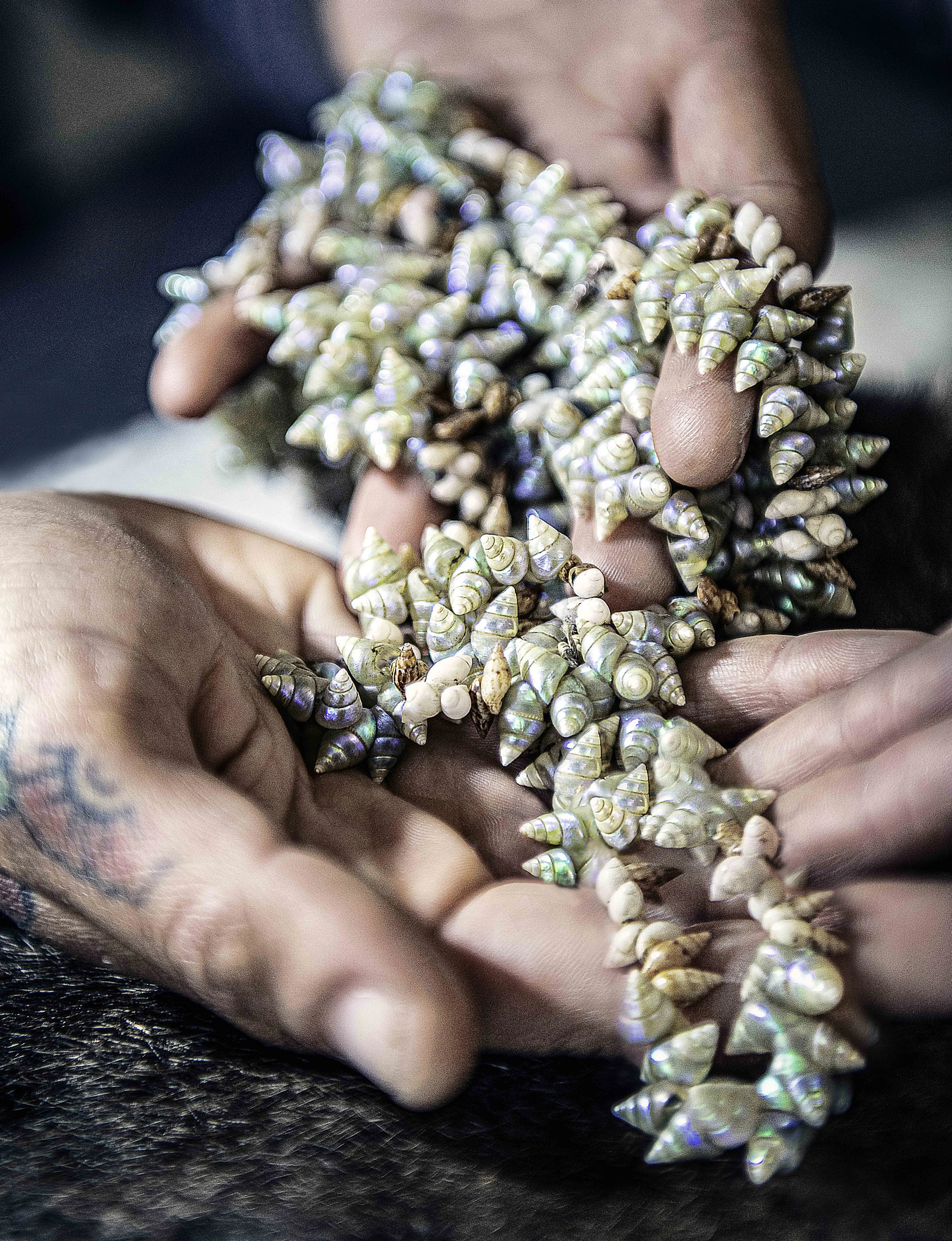
She also enjoys making the beautiful shell necklaces that are an important cultural activity for palawapeople.
Carleeta left Cape Barren Island to attend high school in Hobart when she was 12.
‘I found city life crazy and very challenging,’ she says. ‘I encountered bullying and racism and struggled to fit in. I even felt discrimination from some of the teachers.’
After leaving school Carleeta was fortunate to be asked by palawa elders Uncle Clive and Uncle Graham to complete a guiding course and join the Wukalina Walk.
‘I knew I had a palawa background but I didn’t begin to really understand it until I was 18. Learning about the Wukalina Walk helped me to examine my family history, which I had suppressed.’
She has now been a tour guide on the Wukalina Walk for 10 years and is a proud and strong palawa woman.
‘Wukalina Walk is a multi award-winning 4 day/3 night journey across our traditional homelands in northeast lutruwita/Tasmania,’ Carleeta says. ‘The walk is 100% palawa owned, operated and guided. It’s an opportunity to join us on our homelands and share in our unique First Nations culture.’
On the Wukalina Walk, small groups learn about palawa people’s ongoing connection to Country through cultural activities, stories, bushfoods, yarning around the fire, walking together and more. Accommodation is in an architecturally-designed coastal standing camp near wukalina/Mt William and in a beautifully renovated lightkeeper’s cottage at larapuna/Bay of Fires.
‘We talk about what palawa life would’ve been like pre-invasion but also acknowledge the positives like the land hand-backs and the palawa festivals,’ she explains. ‘You get immersed in the experience and open up your senses and listen to Country and the bush when you are not connected to technology.’
Carleeta says participants come from across Australia and around the world.
‘We like to welcome young people on the walk,’ she says. ‘It’s an important way for Tasmanian students to learn the palawa history that they weren’t taught in school.’
16. Vandy Kanneh
Vandy Kanneh was born in Liberia, a country that was founded in 1847 by freed American slaves.
Although it is rich in resources, Liberia remains one of the world's poorest countries. There were devastating civil wars in the 1990s, with thousands of people fleeing from the conflicts.
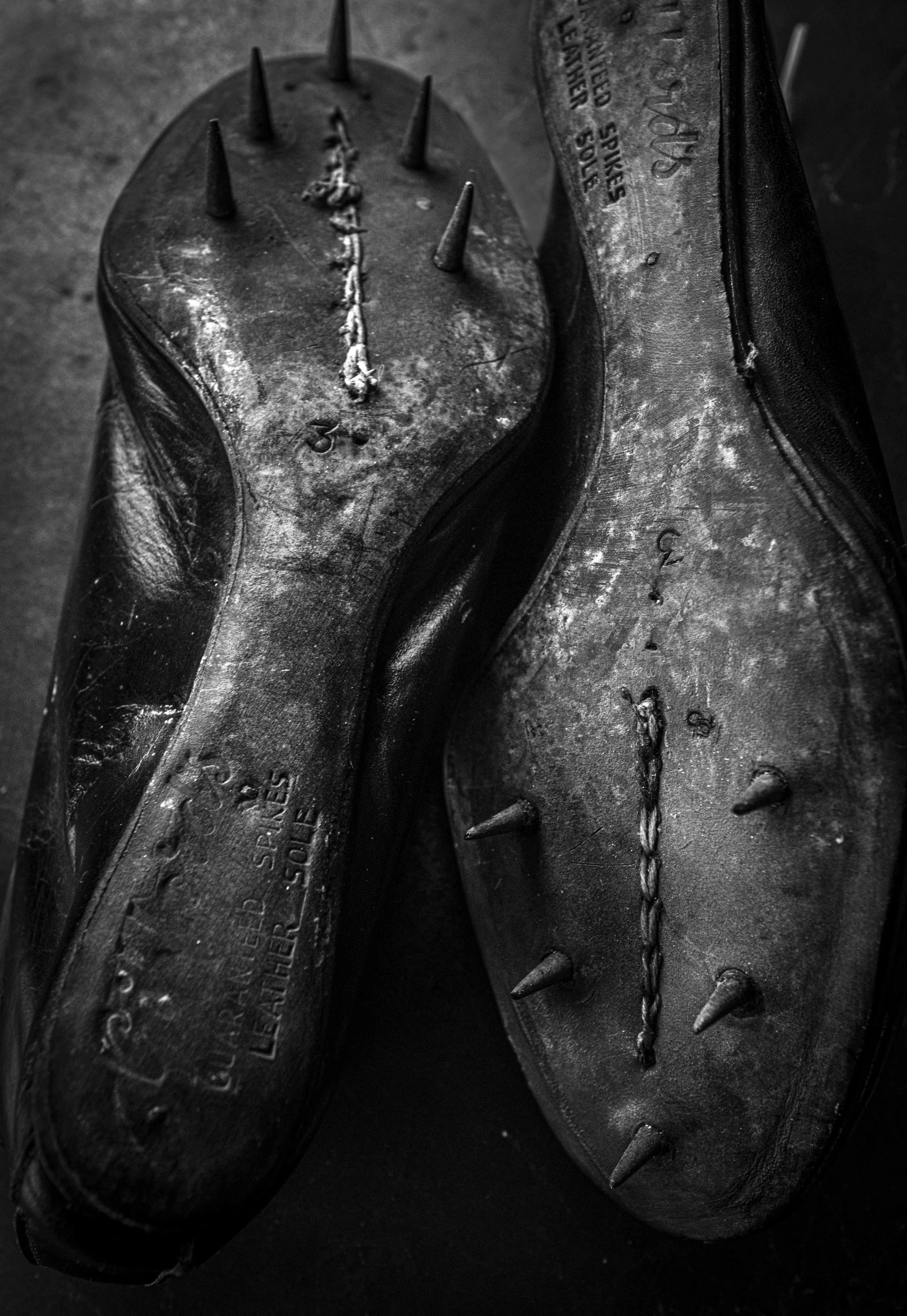
Vandy’s family became refugees. As a young boy, he dreamed of being an athlete but that dream seemed unattainable.
There was no way I could afford spiked track shoes,’ he says.
His path to the top echelon of junior sprinting had several false starts. As an 18-year-old he was shuttled around refugee camps in Liberia, Ghana and Sierra Leone for five years.
‘My mother died in one of the camps, then I was informed I had received refugee status and would be travelling to Tasmania, on the other side of the world,’ he says.
It was an exciting but anxious time for Vandy. What would he find? Would he be accepted? What did he know about Tasmania? Why does it sound like Tanzania?
‘These questions were swirling around in my mind,’ Vandy laughs. ‘But then in 2005 I came to Australia to stay with my aunt.’
Athletics coach Scott Goldsmith spotted Kanneh's talents at a Hobart Little Athletics meeting in 2007 and Vandy went to live with his coach's family in 2011.
With his father still in Africa, it was Goldsmith who took on the father-figure role in Vandy’s life. He was unofficially adopted into Scott’s family of four. Scott and Carol became his new parents and Vandy thrived.
‘Me and my coach have a great relationship,’ Vandy says. ‘He has trained me for seven years and I live with his family, so he's pretty much like a dad for me.’
After time and dedication Vandy was amazing even himself, running times under 11 seconds for the 100 metres. A highlight was when he ran 10.57 seconds with a four metre handicap and won the Hobart Gift.
Vandy stood out in their neighbourhood. Scott recalls the day that someone painted swastikas on his front fence.
‘I quickly painted them over,’ Scott says. ‘I didn’t have the heart to tell Vandy what they meant,’ Scott recalls.
17. Yolanda Yuen
When Yolanda came to Australia from Switzerland, she understood five languages! She is fluent in English and can also speak all four Swiss national languages – French, German, Italian and Swiss.
How many languages do you speak? If you’re like many Australians, the answer is easy – just one.
‘Switzerland is bordered by France, Germany, Italy, Austria and Liechtenstein,’ Yolanda explains. ‘There are also other dialects as you get closer to the border of each country. Most Swiss people speak English too, so for travellers, it means you can explore Switzerland through five distinct linguistic and cultural lenses – sometimes in the same day.’
Each language dominates a different region and together they shape Swiss culture, identity and the country’s daily life.
Australia is at the other extreme – we’re an island nation in an isolated part of the globe with no land borders to any other countries, so we speak a uniquely Australian brand of English. New immigrants often find our quirky local slang tricky and confusing to understand, but it’s a key part of our national character.
Yolanda came to Tasmania to teach art and languages. She was quite surprised that some students weren’t familiar with the basics of their own native tongue.
‘Nouns, verbs, sentence structure – for some of my students, they meant nothing,’ she laughs. ‘I had to go back to the drawing board with English before I began to teach another language!’
With her finely-tuned ear for languages, Yolanda can recognise regional Australian accents that locals often miss.
‘People from Western Australia sound quite different from Tasmanians,’ she says. ‘And Queenslanders are easy to pick, with their broader, slower accent.’
Learning a country’s native language can bring people together, so Yolanda finds it strange that Australian students might learn French, Indonesian, German or Cantonese before they’d learn an indigenous Aboriginal language.
Yolanda loves Tasmania – our island’s clean and fresh environment reminds her of her home.
‘But I do find it funny when it snows on Ben Lomond and everyone rushes up to make the most of it,’ she says. ‘Those ski fields are like practice runs compared to Switzerland!’In a tight-knit regional community where everyone knows everyone else, Yolanda says it can take a while to be accepted and fit in.
‘I thought I spoke English quite well – but because I have an accent, people often speak slowly to me, thinking I can’t understand!’
Do you speak Tasmanian?
The name of our new AFL team mascot is a good example of local Tasmanian slang. He’s called Rum’un – a short version of ‘a rum one’. (‘Rum’ meaning odd or strange.) It’s a term that originated in Britain and has largely died out elsewhere but curiously has survived in Tasmania, where it is still used to describe a mischievous or eccentric character. (You might hear someone say something like: ‘Yeah, that old bloke with the long beard, he’s a bit of a rum’un.’)
Tasmanian slang is partially derived from convicts – nearly half of all Australian convicts were sent to Van Diemen’s Land, so many Tasmanians have convict ancestry.
Convicts developed their own distinct slang known as ‘flash’ or ‘cant’. Derived from London criminal slang, it helped to conceal their intentions from authorities and created a shared, rebellious identity. The vocabulary was so unusual that officials sometimes required interpreters in court!
How many of these examples have you heard?
Beak Magistrate
Bum trap Sheriff or bailiff
Horney Constable
Flesh bag Shirt
Hopper-dockers Shoes
Shiv Knife
Quod Prison
Buz Pick a pocket
Cracksman House breaker
Danna Excrement (that’s where we get ‘dunny’)
Togs Clothes
Swag A thief’s loot
18. Marti Zucco
Marti Zucco’s hard-working parents migrated to Australia from Italy to find a fresh start and escape the restrictions imposed after World War II. Marti was born in Victoria, where his father, who was a smart business person but had little formal education, worked on the railways.
‘Dad used to take meals of leftover pasta to work for lunch,’ Marti says. ‘His workmates were a bit scornful at first but pretty soon they were asking him to bring some for them too. It just shows how food can bring people together.’
Food has a began a dominant theme in Marti’s life. He worked at the iconic Romano’s restaurant and then at Wrest Point Hotel Casino in the late 1970s. Then in 1977 he opened one of Hobart’s first Italian restaurants in North Hobart.
‘Many people said I was mad,’ Marti says. ‘North Hobart was a tough working class suburb in those days, why would I want to open a restaurant there? Some of the housing was slums and locals often tried to do a runner without paying.’
Marti’s became Hobart’s best known pizzeria and it was a pioneer business in what is now the city’s premier restaurant hub, where many international food styles can be found – as well as Italian, there’s Thai, Japanese, Mexican, Chinese and more, all in a short strip of Elizabeth Street.
‘I played Aussie Rules, too and supported the North Hobart footy club,’ he says. ‘I had a footy in my hand from the age of four and I made a lot of good mates through the game. But they used to tell me that most Italians played ‘wog ball’ – that’s what they called soccer.’
Well known as a Hobart City Councillor, Marti is a respected champion of the underdog and has strong views on racism.
‘Racism does exist but it’s nothing like it was in the 1970s. I was openly called a wog and was once told to give up my seat on public transport to a real Australian!’ Marti laughs. ‘And I was born here!’
He believes there will always be a small minority of ignorant racist people in our society. ‘People who are battling and can’t find a rental or afford to buy a house in their own suburb become resentful, and this fuels anger and racism,’ Marti explains.
Marti also thinks we should be educating children about our colonial and migrant history.
‘It’s important they understand why we are a lucky country, that our fore-fathers fought for our freedom in two world wars,’ Marti says.
Marti’s most treasured possessions are some of his parents’ jars of olive oil, liqueurs and pickled vegetables and a well-sharpened, well-used pocket knife that belonged to them.
‘They’re simple things, but they remind me of my own Italian culture and the long journey my parents made to Australia,’ he says.
19.Md Imadul Islam Rahat
Rahat was born in Bangladesh which has been through centuries of struggle before finally attaining independence. Its history is marked by Hindu, Buddhist and Muslim influences. Bangladesh which is rooted in the ancient, wealthy Bengal region was transformed into a sovereign nation on December 16, 1971, following a nine-month war of liberation against Pakistan.
Today Bangladesh's primary resources are anchored in agriculture (rice, jute), natural gas, and significant, underutilized marine resources in the Bay of Bengal. The economy heavily relies on the garment manufacturing sector and is number two in the world behind China. If you look at your shirt’s care label it was probably made in Bangladesh.
Most of Rahat’s family members were in business. Had very supportive parents who had a strong focus on education. Rahat studied hard and was rewarded when he received scholarships in Bangladesh and other Australian universities including Tasmania Uni. After completing college he wanted some freedom and a challenge and to travel overseas.
‘I arrived in Sydney but didn’t feel it was right for me, I was drawn to Tasmania and being a huge cricket fan I greatly admired Ricky Ponting’, Rahat laughs. ‘Getting of the plane in Hobart I wasn’t prepared for the wonderful cool fresh air. I loved Hobart because it’s what I call a three dimensional cities, it’s one of the most beautiful in the world, you can see the mountain and sea from most locations’, Rahat explains.
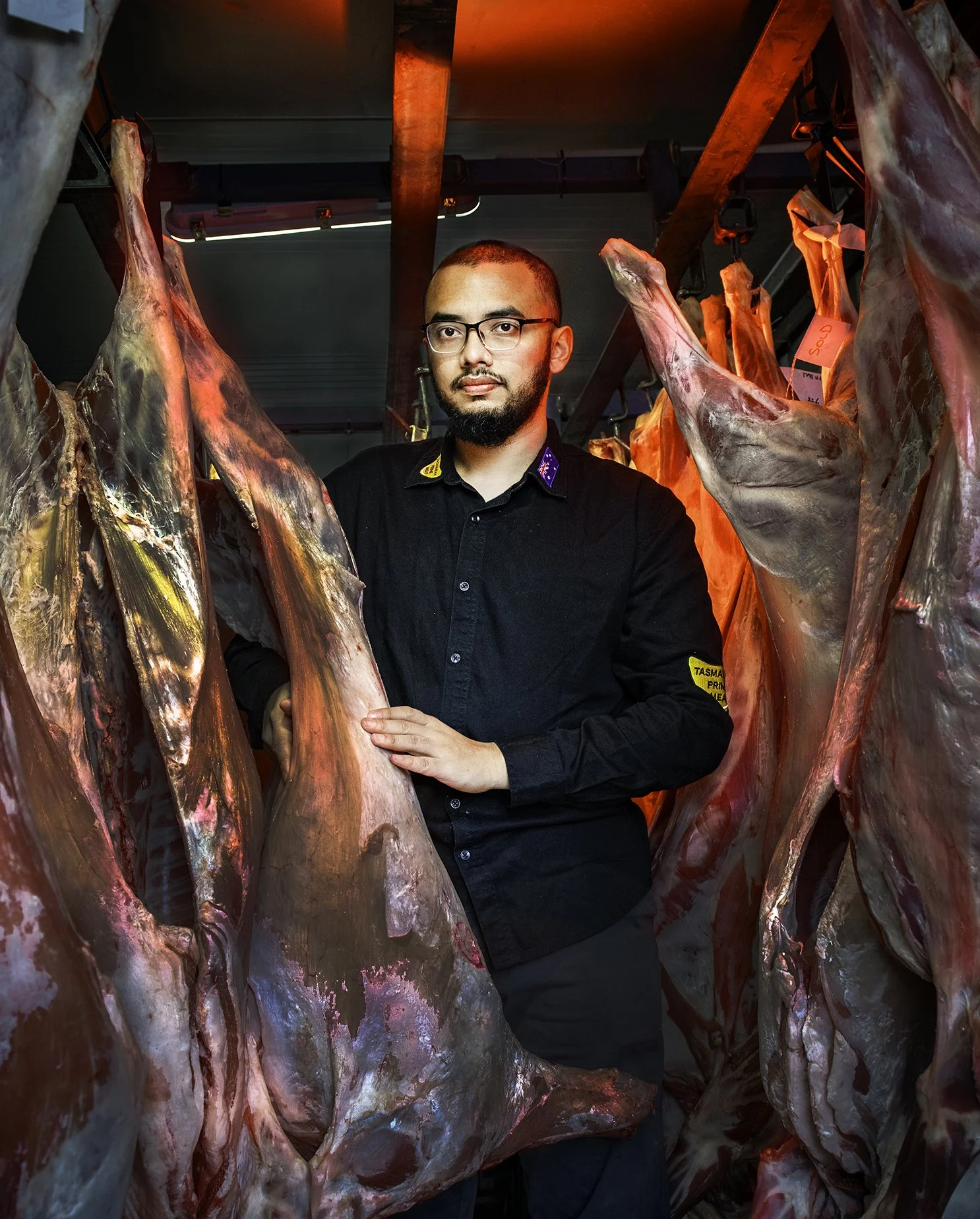
Rahat opened a Halal butcher in Goodwood, which was near the local Muslim community.
Halal is an Arabic word meaning "lawful" or "permitted" and refers to food that Muslims are allowed to eat, following Islamic dietary laws outlined in the Koran.
Key principles include the prohibition of pork, alcohol, and blood, as well as a specific method for slaughtering animals to ensure they are drained of blood and the name of God is invoked. The slaughterer must be a Muslim who says "in the name of Allah" (Bismillah) before the act.
Most plant-based foods, such as vegetables, fruits, and grains and fish and seafood, are naturally halal. Meat from animals like cows, goats, chickens, and ducks, are permitted as long as they are slaughtered according to Islamic law. All dairy products are halal as long as they don't contain non-halal additives like pork gelatine.
Rahat says locals didn’t understand what Halah meant and thought it had negative connotations so the shop’s staff received racially charged attacks and negative feedback online. Furthermore his daughter and wife were physically attacked on a local bus when a man tried to pull her hijab off. The shop has also has been vandalised many times. Last year he lost $5,000 worth of product. Thankfully the thieves were caught but the product was never returned.
Rahat is a leader in his community and holds prayers every Friday at the Glenorchy community centre. His prayers bring community members together and teach resilience. His business is now a cornerstone of the Muslim community in the Glenorchy region.
Rahat now has a second Halah butchery business in Launceston and sells some of Tasmania’s best high end produce at very affordable prices.

Acknowledgement of Country
In recognition of the deep history and culture of this island, the Faces From Our Town project acknowledges Tasmanian Aboriginal people, the original and continuing custodians of the Land, Sea and Sky. We acknowledge and pay our respects to all Aboriginal people of Lutruwita, all of whom have survived invasion and dispossession and continue to maintain their identity, culture and Aboriginal rights.